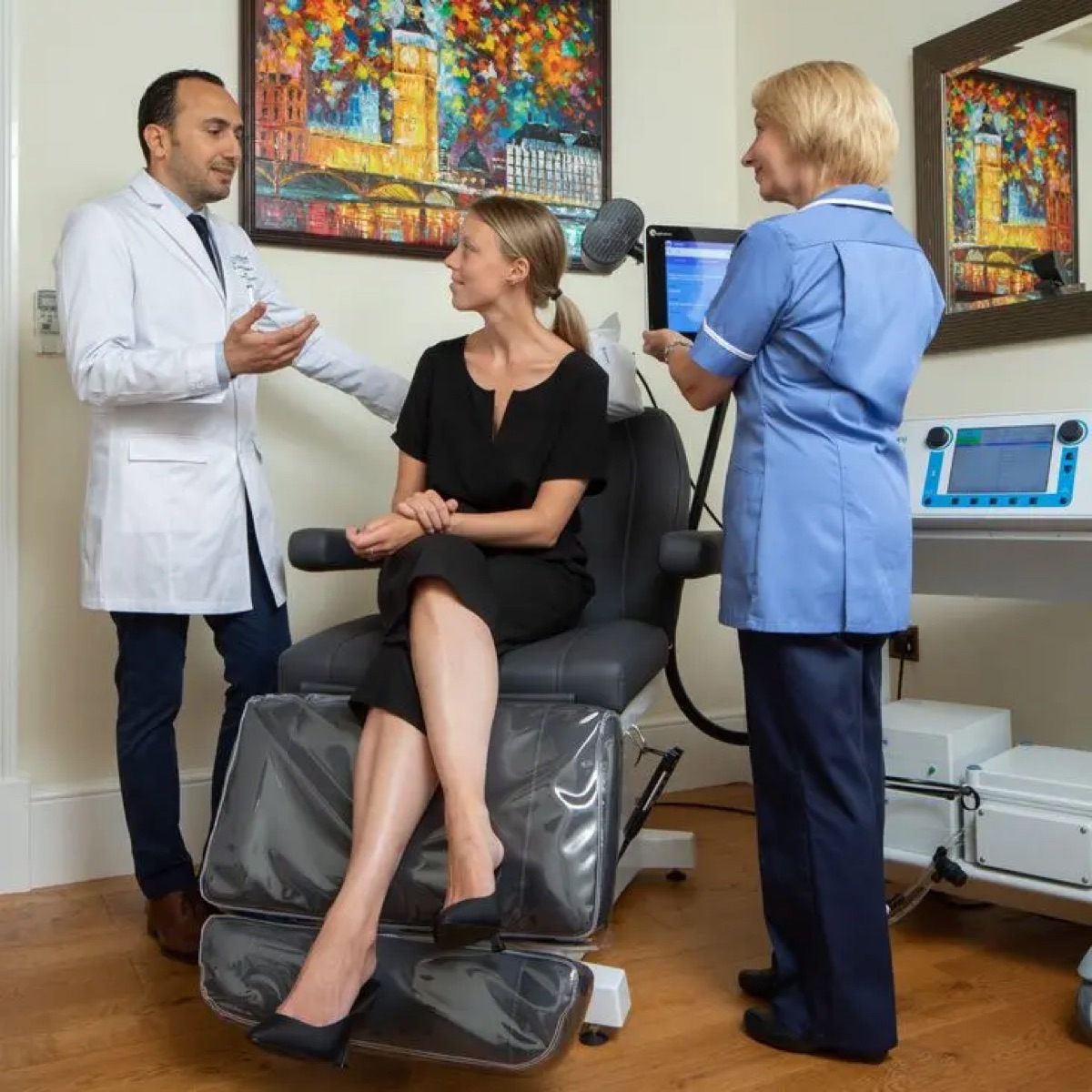
Verified Clinic
tms_center
London TMS Centre
London, Greater London
4.9 (67)
Technology TMS Device (high-performance clinical system)
Insurance accepted Bupa AXA Self-Pay
Compare 5 NICE-approved TMS therapy clinics in London, Greater London. View ratings, treatment technology, NHS and private options, and book consultations.
London, Greater London

London, Greater London

London, Greater London

London, Greater London

London, Greater London
From how TMS works to insurance coverage, costs, and what to expect - here's a comprehensive guide to finding TMS therapy in London.
Transcranial Magnetic Stimulation (TMS) is a non-invasive, FDA/NICE/Health Canada/TGA-cleared treatment that uses focused magnetic pulses to stimulate underactive regions of the brain linked to depression and other mental health conditions. Unlike electroconvulsive therapy (ECT), TMS requires no anaesthesia, no surgery, and causes no memory impairment.
In London, Greater London, there are 5 TMS clinics are listed in our directory. A full course typically consists of 20-40 sessions, delivered 5 days a week over 6-8 weeks. Each session lasts approximately 20-40 minutes, and patients typically resume normal activities immediately afterward.
TMS is primarily used for treatment-resistant depression but has expanding clinical applications. In London, Greater London, clinics offer TMS for:
NICE-approved for treatment-resistant depression and OCD under NHS and private psychiatric care pathways. BUPA, AXA PPP, Aviva, and other private health insurers typically cover TMS when pre-authorised and when standard medication and psychotherapy have not provided adequate relief.
The three main TMS devices are FDA/NICE/Health Canada/TGA-cleared and available at clinics in London. Each uses a different coil design and stimulation protocol:
The most widely used TMS system. Targets the left dorsolateral prefrontal cortex (DLPFC) for depression. Standard protocol: 37.5 min sessions, 5x/week for 6 weeks.
Uses an H-shaped coil that penetrates deeper and broader brain regions. Cleared for depression and OCD. May be effective for patients who did not respond to standard rTMS.
Offers both standard and accelerated Theta Burst protocols. TBS can reduce session time to 3-6 minutes with comparable efficacy to standard 37.5-minute sessions.
Searching for "TMS therapy near me" in London, Greater London? You're in the right place. This page lists all 5 TMS clinics near you in London — with patient reviews, accepted insurance plans, pricing, and the TMS technology each provider uses, where listed. Whether you're looking for depression treatment near you, a TMS psychiatrist near you, or accelerated TMS near you, every listing here is within reach of London.
TMS is short for transcranial magnetic stimulation — so if you've been searching for "transcranial magnetic stimulation near me", "transcranial magnetic stimulation in London", "rTMS near me", or "deep TMS near me", the London clinics on this page provide TMS; devices vary by clinic and may include NeuroStar, BrainsWay deep TMS, and theta burst systems.
To choose the right TMS treatment near you: check that the clinic accepts your insurance, ask who supervises treatment and what their credentials are, and compare patient ratings above. Many TMS clinics offer phone consultations and insurance benefit checks. You can also view every TMS clinic near you on the map or take our 2-minute eligibility quiz before you call.
For clinic owners
Run a TMS clinic in the United Kingdom?
See how the 17 listed clinics there compete for patients, what people search for, and where we'd start.
 Kaiser Permanente Coverage
  Humana TMS Coverage
  Medicare Coverage for TMS
 Get instant access to our comprehensive guide