Find TMS therapy
near you.
Compare TMS providers across the US — devices, conditions treated, insurance accepted and cost, in one place. Free, no signup.
Understand TMS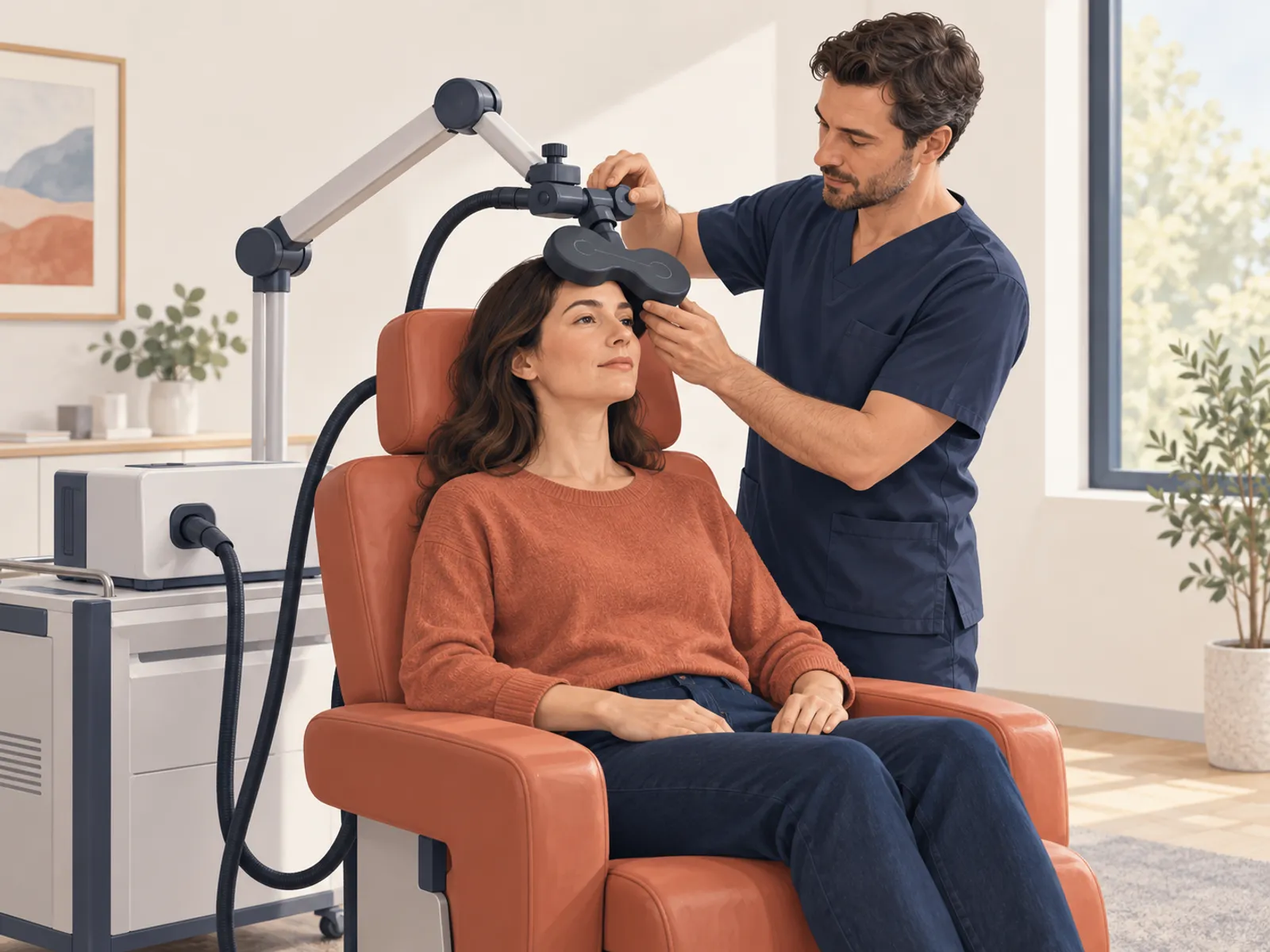
- Clinics listed
- 3,500+
- US states covered
- 50
- Specialists listed
- 6,100+
Featured clinics.




Find care near you.
Precision medicine for
neural health.
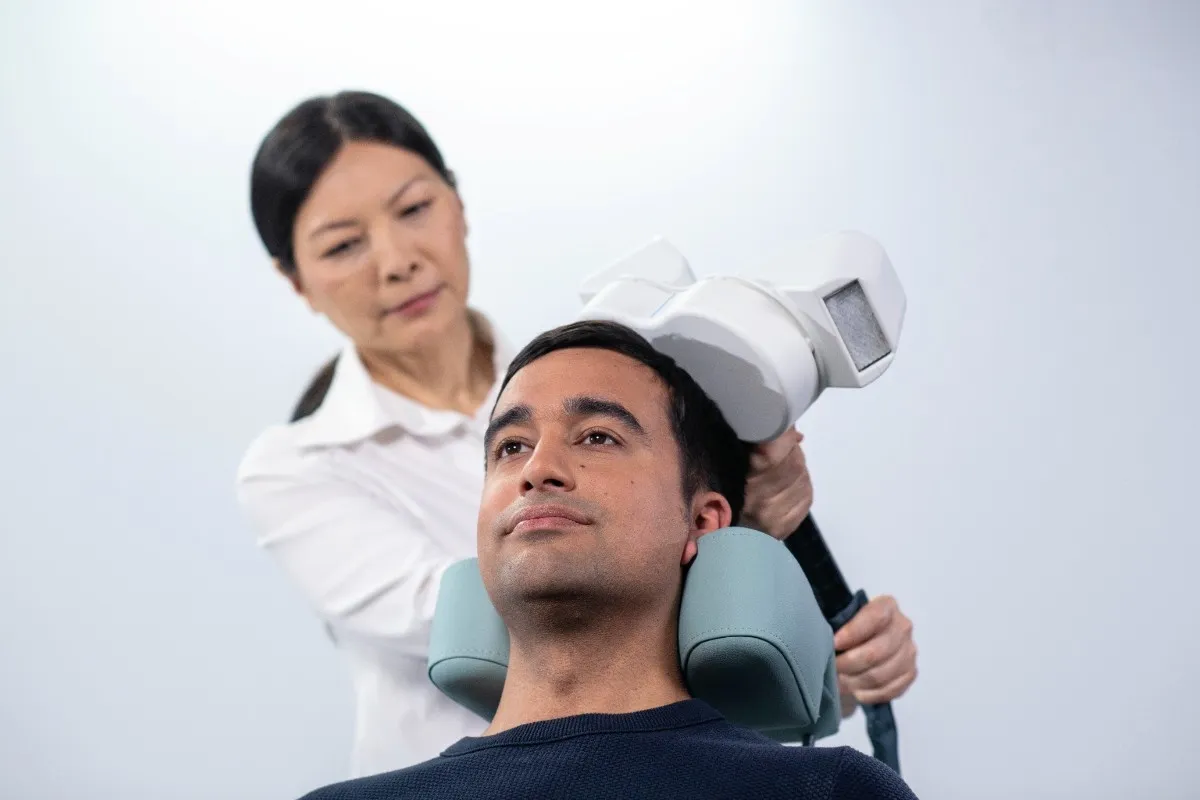
A magnetic coil held against the scalp sends focused pulses into the prefrontal cortex — the region that regulates mood — and gradually reactivates circuits that depression has left underactive.
-
Targeted, not systemic
Unlike medication, TMS acts on specific circuits, so whole-body side effects are rare.
-
No anesthesia, no downtime
You stay awake in a chair and can drive yourself home afterwards.
-
FDA-cleared since 2008
Cleared for major depression, later for OCD (2018) and smoking cessation (2020).
From coil to cortex.
- 01 · The coilPositioned outside the head.
- 02 · Magnetic pulsesThe field passes through the skull.
- 03 · The cortexInduced currents stimulate neurons.
Simplified illustration · Not to scale
From first search to week six.
A typical course is about 36 sessions: five a week for six weeks, then a short taper.
- 01 Before
Check if you’re a candidate
TMS is usually for depression that hasn’t improved after medication.
Take the 2-minute quiz - 02 Before
Find a clinic
Compare 3,500+ clinics by location, device and insurance.
Browse clinics - 03 Before
Consult & insurance
A psychiatrist confirms fit; the clinic requests prior authorization.
Insurance guides - 04 Week 1
Mapping
Your motor threshold is measured and the treatment target is set.
- 05 Weeks 2–5
Daily sessions
Five sessions a week. Many people notice changes from week three.
- 06 Week 6+
Taper & follow-up
Sessions space out; your clinic tracks scores like the PHQ-9.
- ~36 sessions
- 3–37 min each, depending on protocol
- No anesthesia
- Drive yourself home
Where TMS stands.
How TMS compares with the other paths for treating depression.
| TMS therapyFDA-cleared | Medication | Talk therapy | ECT | |
|---|---|---|---|---|
| Response rate† | 58–83% | 40–60% | 40–50% | 60–80% |
| Side effects | Minimal | Common | None | Significant |
| Anesthesia | No | No | No | Yes |
| Time to effect | 2–4 weeks | 4–8 weeks | Months | 1–2 weeks |
| Insurance | Often covered | Covered | Varies | Covered |
| Day-to-day | Daily visits, 3–37 min | Ongoing pills | Weekly visits | Recovery days |
TMS therapy FDA-cleared
- Response rate†
- 58–83%
- Side effects
- Minimal
- Anesthesia
- No
- Time to effect
- 2–4 weeks
- Insurance
- Often covered
- Day-to-day
- Daily visits, 3–37 min
Medication
- Response rate†
- 40–60%
- Side effects
- Common
- Anesthesia
- No
- Time to effect
- 4–8 weeks
- Insurance
- Covered
- Day-to-day
- Ongoing pills
Talk therapy
- Response rate†
- 40–50%
- Side effects
- None
- Anesthesia
- No
- Time to effect
- Months
- Insurance
- Varies
- Day-to-day
- Weekly visits
ECT
- Response rate†
- 60–80%
- Side effects
- Significant
- Anesthesia
- Yes
- Time to effect
- 1–2 weeks
- Insurance
- Covered
- Day-to-day
- Recovery days
† Approximate response rates from published studies; the TMS range is from the Clinical TMS Society registry (Sackeim et al., 2020). Individual results vary — talk to your provider.

What does TMS cost?
Most US insurers cover TMS for depression once criteria are met. What you pay depends on your plan, your clinic and the protocol.
- With insurance
- $30–$75 typical copay per session, after prior authorization
- Without insurance
- $6,000–$12,000 for a full course; many clinics offer payment plans
What TMS treats.
FDA-cleared uses are marked. Others are offered by some clinics based on emerging research.
Meet TMS specialists.




Is TMS right
for you?
Answer a few questions about your condition and treatment history, and see whether you’re likely a good candidate.
Take the free quiz
Your questions, answered.
What is TMS therapy?
Transcranial magnetic stimulation uses focused magnetic pulses to stimulate the brain region that regulates mood. It is non-invasive, needs no anesthesia, and is FDA-cleared for major depression, OCD and smoking cessation.
Read the full answer Does TMS hurt?
Most people feel a tapping sensation on the scalp during the pulses. Mild headache or scalp discomfort is the most common side effect and usually fades within the first week or two. You can drive yourself home afterwards.
Read the full answer How long does a course take?
A standard course is about 36 sessions: five a week for roughly six weeks, then a short taper. Each session lasts from about 3 to 37 minutes depending on the protocol your clinic uses.
Read the full answer How much does TMS cost?
A full course typically costs $6,000–$12,000 before insurance. With coverage, most patients pay a copay or coinsurance per session.
Read the full answer Does insurance cover TMS?
Medicare and most major US insurers cover TMS for depression when criteria are met — usually a diagnosis of major depression and several medications that didn’t work. Prior authorization is normally required.
Read the full answer How effective is TMS for depression?
In the Clinical TMS Society registry of 5,010 patients, up to 62% reached remission on clinician-rated scales (Sackeim et al., 2020). Results vary with the measure used and each person’s treatment history.
Read the full answerReady when you are.
No drugs, no surgery — find a clinic near you and see whether TMS fits.
Comparing clinics? Get the free TMS Buyer’s Guide (PDF)