What happens in a TMS session
An animated walkthrough of one TMS therapy session: motor-threshold mapping, coil placement over the left prefrontal cortex, how the magnetic pulse reaches the cortex, session length, a typical 6-week course, and going home afterwards.
Read the narration
Wondering what a TMS session is really like? Here it is, step by step.
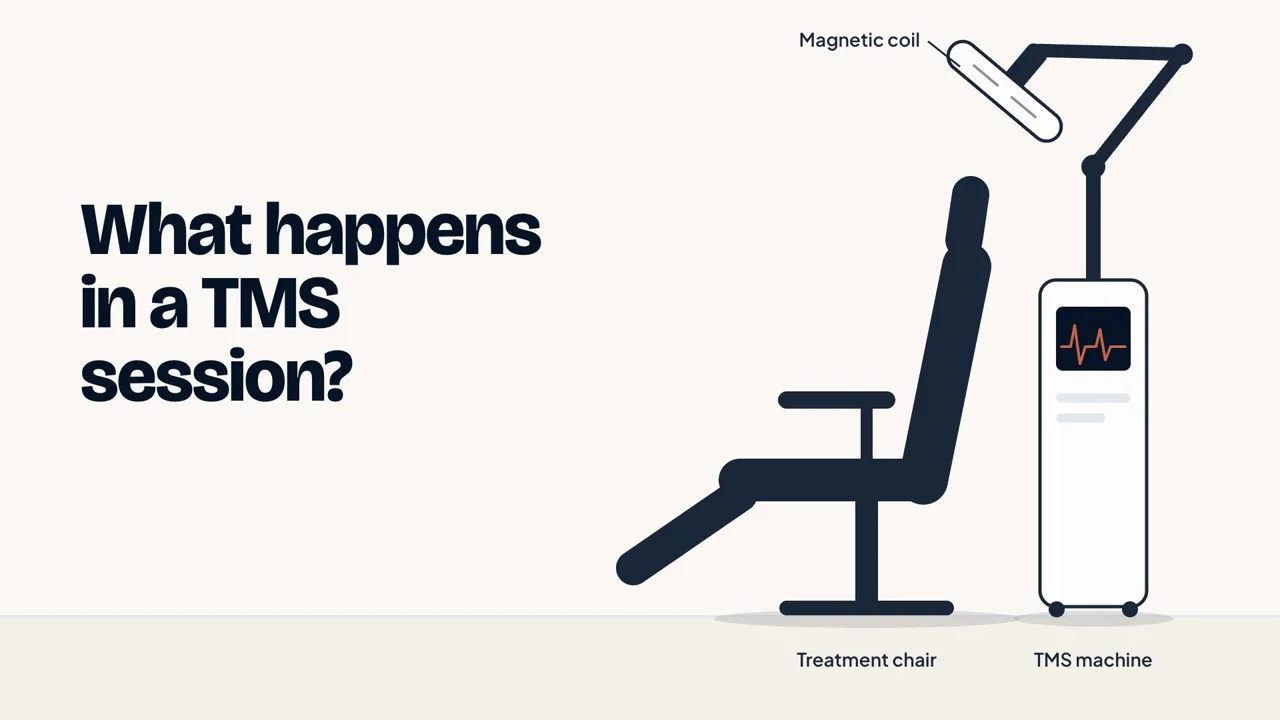
You settle into a reclining chair, and you stay awake the whole time.
First, your care team finds the lowest pulse strength that makes your thumb move. That becomes your dose.
Then the coil moves forward, over a mood region that's often less active in depression.
Each pulse sends a quick burst of current through the coil.
Its magnetic field, similar in strength to an MRI, passes through the skull.
Inside the brain, it gently prompts neurons to fire.
Over weeks, that aims to re-energize mood circuits.
Sessions usually last twenty to forty minutes, or just a few minutes with theta burst.
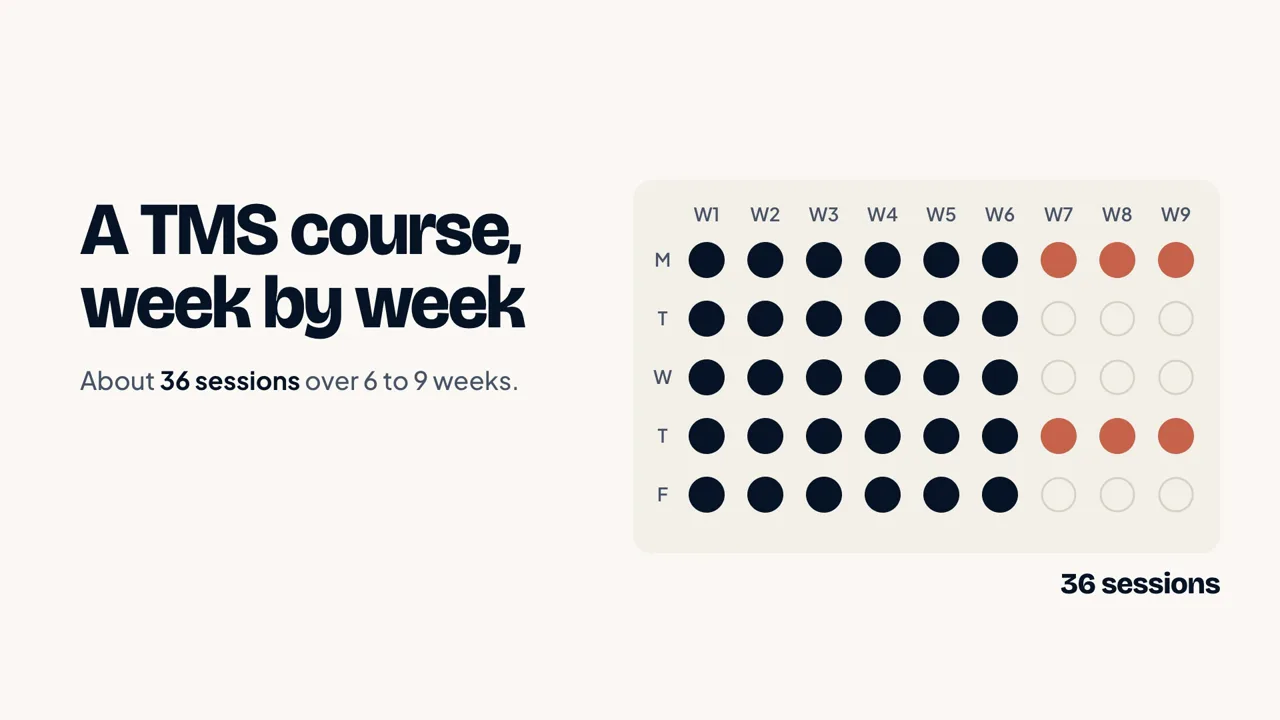
You'll typically come five days a week for about six weeks, then taper off. That's around thirty-six sessions.
Afterwards, you can drive yourself home. The most common side effects are scalp discomfort or a mild headache.
You're in, you're out, and back to your day.
Find a TMS clinic near you on TMS List.
This video explains how TMS generally works. It is not medical advice; your doctor sets your own treatment plan.