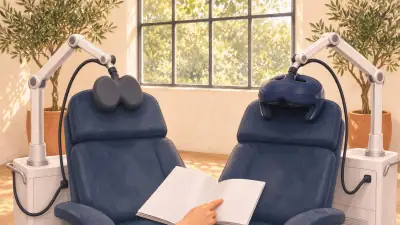
Treatment-resistant depression (TRD) usually means major depression that has not improved enough after at least two antidepressants, each taken at a proper dose for long enough. It is common, and it is the situation TMS was first cleared for. This page covers what the label actually means, how Medicare decides whether you meet it, and how TMS compares with the other treatments once two medications have failed.
For how TMS works and what a session feels like, see TMS for depression. For a week-by-week patient walkthrough, read TMS for treatment-resistant depression: what patients need to know.
What “treatment-resistant” actually means
There is no single official definition. A review done for the Centers for Medicare & Medicaid Services (CMS) and the Agency for Healthcare Research and Quality found no consensus on TRD (Gaynes et al., 2020). The most common definition for major depression required at least two failed treatments, with confirmation that each was given at an adequate dose and duration. Only 17% of the intervention studies in that review enrolled patients who met this common definition, which is one reason TRD results are hard to compare across studies.
Why an “adequate trial” matters
A medication only counts as failed if it had a fair chance. A starting dose taken for three weeks is not an adequate trial, and neither is a prescription you took on and off. Your psychiatrist will want to know whether the dose was high enough, whether you took it long enough, and whether you took it consistently.
Insurers care about this too. Medicare’s CGS policy is unusually specific: less than a 50% drop in PHQ-9 or HAM-D scores after at least six weeks at the FDA-labeled dose. Most other policies simply say “adequate dose and duration”, which leaves room for clinical judgment but also for denials when the records are thin.
Staging how resistant depression is
Some clinicians grade resistance instead of treating it as yes or no.
- The Thase-Rush model (1997) sorts people into five stages by how many and which kinds of treatment have failed, with MAOIs and ECT reserved for the later stages.
- The Maudsley Staging Method (Fekadu et al., 2009) adds two more factors: how severe the depression is and how long the current episode has lasted. Scores run from 3 (minimal resistance) to 15 (severe resistance).
You don’t need a stage to qualify for TMS. The idea is still useful, because odds tend to fall as resistance rises. In the NIMH-funded OPT-TMS trial, most of the people who reached remission had low treatment resistance (George et al., 2010).
How common it is
STAR*D, a large NIMH study of outpatients, offered up to four treatment steps in a row. Remission rates were 36.8% at step one, 30.6% at step two, then 13.7% and 13.0% at steps three and four (Rush et al., 2006). The reported cumulative remission was 67%, so about a third of people had not remitted after four steps. A 2023 reanalysis of the patient-level data, using the outcome measure the protocol originally specified, put cumulative remission at 35.0% (Pigott et al., 2023). Whichever figure you use, the pattern is the same: after two medications, each new one helps fewer people.
In the US, a 2021 estimate from insurance claims found 8.9 million adults with medication-treated major depression over 12 months, and 2.8 million of them (30.9%) met TRD criteria (Zhdanava et al., 2021).
How insurers define TRD for TMS
This is where the definition stops being academic. Your insurer’s version decides whether TMS gets approved.
TMS devices are FDA-cleared for adults with major depression who have not improved enough on prior antidepressant medication in the current episode. NeuroStar’s early clearance wording referred to failure of one prior antidepressant at or above the minimal effective dose and duration. Insurers often ask for more than that.
Original Medicare is the clearest example because its rules are public. TMS coverage comes from local coverage determinations (LCDs) written by regional contractors, and they don’t agree with each other. Here is how the active LCDs compared as of October 2026:
| Medicare contractor (LCD) | States | Medication history required | Psychotherapy trial |
|---|---|---|---|
| Novitas (L34998) | AR, CO, DE, DC, LA, MD, MS, NJ, NM, OK, PA, TX | Failed or couldn’t tolerate one or more antidepressant trials at adequate dose and duration | Not listed |
| First Coast (L34522) | FL | Same as Novitas | Not listed |
| Noridian (L37086) | AK, AZ, CA, HI, ID, MT, NV, ND, OR, SD, UT, WA, WY | Any one of: no response to antidepressants from two or more drug classes in this episode; intolerance in two trials from two classes; a past response to rTMS; or currently having ECT | Required, with standardized rating scales |
| WPS (L34641) | IN, IA, KS, MI, MO, NE | Same as Noridian | Required |
| Palmetto GBA (L34869, Part B) | AL, GA, NC, SC, TN, VA, WV | Same as Noridian | Required |
| Wellpoint Federal, formerly NGS (L33398) | CT, IL, ME, MA, MN, NH, NY, RI, VT, WI | Same as Noridian | Required |
| CGS (L36469) | KY, OH | Two trials from two or more classes with under 50% improvement after six weeks at the labeled dose; or intolerance in four trials from two or more classes; or a past rTMS response; or current ECT | Required |
A few other differences are worth knowing. Most of these policies require severe major depression, while Wellpoint Federal’s says major depressive disorder without that qualifier. The Noridian, WPS and CGS billing rules allow up to 20 sessions over four weeks, plus five tapering sessions if you are in remission. If you have improved by at least 25%, they allow two more weeks (10 sessions) plus six tapering sessions. Maintenance TMS is not covered under Noridian, WPS, CGS or Wellpoint Federal, though Noridian, WPS and Wellpoint Federal allow retreatment after a relapse if you previously improved by more than 50%.
Our Medicare TMS coverage guide goes through costs and Medicare Advantage, and Does Medicare cover TMS? gives the short version. Commercial insurers write their own policies, so ask the clinic to check yours before you start.
Your options once two medications have failed
No option is right for everyone. How severe the depression is, suicide risk, psychotic symptoms, other medical conditions, cost and how much time you can give to treatment all shape the choice. This table puts the main options side by side.

| Option | Regulatory status | How it’s given | What TRD studies show | Main trade-offs |
|---|---|---|---|---|
| Switch or add a medication | Many antidepressants, and aripiprazole as an add-on, are FDA-approved for depression | Daily pills, six weeks or more per trial | VAST-D (after one or more failed antidepressants): 12-week remission 28.9% adding aripiprazole, 26.9% adding bupropion, 22.3% switching to bupropion | Weeks per attempt; STAR*D remission fell to about 13% at steps three and four; aripiprazole linked to weight gain and restlessness |
| Psychotherapy | Not a drug or device | Weekly sessions | Required before TMS under most Medicare LCDs | Takes weeks; finding a therapist can take time |
| TMS (10 Hz rTMS or iTBS) | FDA-cleared for depression after inadequate antidepressant response | Daily outpatient sessions for 4-6 weeks, awake, no anesthesia | Real-world: 58.0% clinician-rated response, 37.1% remission | Daily visits; headache and scalp discomfort are common; seizures are rare |
| Accelerated iTBS (SAINT/SNT) | FDA-cleared in 2022 | 10 sessions a day for 5 days, MRI-guided targeting | 2026 trial: 50.0% remission with active treatment vs 20.8% with sham at one month | Few clinics offer it; needs MRI; long-term durability still being studied |
| Esketamine (Spravato) | FDA-approved in 2019 for TRD with an oral antidepressant; approved alone in 2025 | Nasal spray in a certified clinic, with at least two hours of monitoring | Approved specifically for TRD | Sedation and dissociation (boxed warning); no driving until the next day after a restful sleep |
| IV ketamine | Not FDA-approved for depression (off-label) | IV infusion; ELEKT-D used 0.5 mg/kg over 40 minutes, twice a week | ELEKT-D: 55.4% response vs 41.2% for ECT in TRD without psychosis | Off-label, so protocols vary by clinic; dissociation during infusions |
| ECT | Long-established treatment | General anesthesia, usually two or three times a week | Meta-analysis: more effective than medication in the short term | Anesthesia each session; short-term memory effects that gradually recover |
| VNS | FDA-approved in 2005 as long-term add-on therapy after four or more failed treatments | Surgically implanted stimulator connected to the left vagus nerve | Five-year registry (not randomized): cumulative response 67.6% vs 40.9% with usual care | Surgery; Medicare covers it only within CMS-approved studies |
A few notes on reading this table. The numbers come from different studies with different patients and different definitions of response, so they can’t be ranked against each other directly. ELEKT-D is the closest thing to a head-to-head comparison here, and it only enrolled people already referred for ECT. ECT has the longest track record of any treatment on this list, and the 2003 UK ECT Review Group meta-analysis found it more effective than drug therapy for depression. It also asks a lot of you in practice, with anesthesia at every session and memory effects in the short term. If you are weighing those two, our TMS vs ECT comparison goes into detail.
What the TMS evidence in TRD shows
Two terms come up in every study. Response usually means your depression score dropped by at least half. Remission means your score fell below a cutoff that counts as minimal or no depression. Remission is the harder bar.
O’Reardon et al., 2007. This was the industry-sponsored trial behind NeuroStar’s clearance. It randomized 301 medication-free patients who had not benefited from prior treatment to active or sham 10 Hz TMS for four to six weeks. Active TMS beat sham on the Hamilton scales at weeks four and six, and on the MADRS at week four after a post hoc correction for a baseline imbalance. Remission was about twice as common with active TMS at week six. Only 4.5% dropped out because of side effects.
George et al., 2010. This NIMH-funded trial had better sham masking than earlier studies. Among 190 antidepressant-free patients, 14.1% remitted with active TMS against 5.1% with sham, and the number needed to treat was 12. In the open-label follow-up, about 30% of patients remitted.
Carpenter et al., 2012. This study followed 307 patients at 42 US practices, closer to how TMS is delivered in real clinics. Patients had failed an average of 2.5 adequate antidepressant trials in their current episode. Clinician-rated response was 58.0% and remission 37.1%. On the PHQ-9, which patients fill in themselves, response was 56.4% and remission 28.7%.
Blumberger et al., 2018 (THREE-D). This Canadian trial randomized 414 adults with TRD to standard 10 Hz rTMS (37.5 minutes) or intermittent theta burst (iTBS, about 3 minutes). Hamilton scores fell from about 23.5 to 13.4 in both groups, and iTBS was non-inferior. Headache was the most common side effect in both arms, at 64-65%. iTBS was rated slightly more uncomfortable.
Cole et al., 2020 and 2022 (SAINT/SNT). The first open-label study gave 50 iTBS sessions over five days, targeted with functional MRI. Of 21 participants who finished, 19 (90.5%) met remission criteria. The follow-up sham-controlled trial randomized 29 people. Four weeks after treatment, MADRS scores had dropped by an average of 52.5% with active treatment against 11.1% with sham.
Kratter et al., 2026. A larger sham-controlled replication randomized 48 people with TRD. At one month, 50.0% remitted with active treatment against 20.8% with sham, and response was 54.2% against 25.0%.
The SAINT numbers show how much study design matters. Remission was around 90% in the small open-label study, then 50% in the larger sham-controlled trial. Open-label results include the placebo effect and careful patient selection. Sham-controlled results are lower but more trustworthy. Both still favored active treatment. For how accelerated schedules work and who offers them, see our accelerated TMS protocol guide.
What to bring to a TMS consult
For TRD, the paperwork matters almost as much as the diagnosis. Prior authorization usually turns on your medication history, and gaps in it cause most delays.

Checklist for your first appointment
- Every antidepressant you have taken in this episode: name, highest dose, start and stop dates, and why you stopped (no effect, partial effect or side effects).
- Any add-on medications, such as aripiprazole or lithium, with the same details.
- Your therapy history: the type of therapy, roughly when, how many sessions and who provided it.
- Past PHQ-9 or other depression scores, if your doctor or therapist recorded them.
- Any past ECT, ketamine, esketamine or TMS, and how you responded.
- Safety details: metal or implants in or near your head, a pacemaker or VNS device, and any seizure history.
- Your insurance card, and for Medicare, whether you have Original Medicare or a Medicare Advantage plan.
- Your current psychiatrist's and pharmacy's contact details. Pharmacy fill records can fill in dates you have forgotten.
If you are starting TMS, keep scoring yourself as you go. Our treatment response tracker logs weekly PHQ-9 scores so you and your clinician can see whether the course is working. Several Medicare policies tie extra sessions to how much you have improved, so those scores can matter for coverage too.
When you are ready to talk to a clinic, find a TMS provider near you and ask how they document medication trials for prior authorization.
References
- Gaynes BN, Lux L, Gartlehner G, et al. Defining treatment-resistant depression. Depression and Anxiety. 2020;37(2):134-145. doi:10.1002/da.22968
- Thase ME, Rush AJ. When at first you don’t succeed: sequential strategies for antidepressant nonresponders. Journal of Clinical Psychiatry. 1997;58(Suppl 13):23-29. PubMed 9402916
- Fekadu A, Wooderson S, Donaldson C, et al. A multidimensional tool to quantify treatment resistance in depression: the Maudsley staging method. Journal of Clinical Psychiatry. 2009;70(2):177-184. doi:10.4088/jcp.08m04309
- Rush AJ, Trivedi MH, Wisniewski SR, et al. Acute and longer-term outcomes in depressed outpatients requiring one or several treatment steps: a STAR*D report. American Journal of Psychiatry. 2006;163(11):1905-1917. doi:10.1176/ajp.2006.163.11.1905
- Pigott HE, Kim T, Xu C, Kirsch I, Amsterdam J. What are the treatment remission, response and extent of improvement rates after up to four trials of antidepressant therapies in real-world depressed patients? A reanalysis of the STAR*D study’s patient-level data. BMJ Open. 2023;13(7):e063095. doi:10.1136/bmjopen-2022-063095
- Zhdanava M, Pilon D, Ghelerter I, et al. The prevalence and national burden of treatment-resistant depression and major depressive disorder in the United States. Journal of Clinical Psychiatry. 2021;82(2):20m13699. doi:10.4088/JCP.20m13699
- Centers for Medicare & Medicaid Services. Local coverage determinations L34998 (Novitas), L34522 (First Coast), L37086 (Noridian), L34641 (WPS), L34869 (Palmetto GBA), L33398 (Wellpoint Federal) and L36469 (CGS). Medicare Coverage Database
- U.S. Food and Drug Administration. NeuroStar TMS Therapy System 510(k) K083538 (predicate K061053). FDA 510(k) database
- Mohamed S, Johnson GR, Chen P, et al. Effect of antidepressant switching vs augmentation on remission among patients with major depressive disorder unresponsive to antidepressant treatment: the VAST-D randomized clinical trial. JAMA. 2017;318(2):132-145. doi:10.1001/jama.2017.8036
- O’Reardon JP, Solvason HB, Janicak PG, et al. Efficacy and safety of transcranial magnetic stimulation in the acute treatment of major depression: a multisite randomized controlled trial. Biological Psychiatry. 2007;62(11):1208-1216. doi:10.1016/j.biopsych.2007.01.018
- George MS, Lisanby SH, Avery D, et al. Daily left prefrontal transcranial magnetic stimulation therapy for major depressive disorder: a sham-controlled randomized trial. Archives of General Psychiatry. 2010;67(5):507-516. doi:10.1001/archgenpsychiatry.2010.46
- Carpenter LL, Janicak PG, Aaronson ST, et al. Transcranial magnetic stimulation (TMS) for major depression: a multisite, naturalistic, observational study of acute treatment outcomes in clinical practice. Depression and Anxiety. 2012;29(7):587-596. doi:10.1002/da.21969
- Blumberger DM, Vila-Rodriguez F, Thorpe KE, et al. Effectiveness of theta burst versus high-frequency repetitive transcranial magnetic stimulation in patients with depression (THREE-D): a randomised non-inferiority trial. Lancet. 2018;391(10131):1683-1692. doi:10.1016/S0140-6736(18)30295-2
- Cole EJ, Stimpson KH, Bentzley BS, et al. Stanford Accelerated Intelligent Neuromodulation Therapy for treatment-resistant depression. American Journal of Psychiatry. 2020;177(8):716-726. doi:10.1176/appi.ajp.2019.19070720
- Cole EJ, Phillips AL, Bentzley BS, et al. Stanford Neuromodulation Therapy (SNT): a double-blind randomized controlled trial. American Journal of Psychiatry. 2022;179(2):132-141. doi:10.1176/appi.ajp.2021.20101429
- Kratter IH, Austelle CW, Lissemore JI, et al. Stanford neuromodulation therapy for treatment-resistant depression: a randomized controlled trial confirming efficacy, and an EEG study. World Psychiatry. 2026;25(1):105-116. doi:10.1002/wps.70032
- Psychiatric News. FDA clears novel, rapid-acting TMS. September 7, 2022. psychnews.org
- Janssen Pharmaceuticals. Spravato (esketamine) nasal spray prescribing information and Medication Guide. FDA label. FDA approval for TRD with an oral antidepressant, March 5, 2019; monotherapy approval, January 2025 (Healio).
- Anand A, Mathew SJ, Sanacora G, et al. Ketamine versus ECT for nonpsychotic treatment-resistant major depression. New England Journal of Medicine. 2023;388(25):2315-2325. doi:10.1056/NEJMoa2302399
- UK ECT Review Group. Efficacy and safety of electroconvulsive therapy in depressive disorders: a systematic review and meta-analysis. Lancet. 2003;361(9360):799-808. doi:10.1016/S0140-6736(03)12705-5
- U.S. Food and Drug Administration. VNS Therapy System approval letter, PMA P970003/S050, July 15, 2005. FDA
- Aaronson ST, Sears P, Ruvuna F, et al. A 5-year observational study of patients with treatment-resistant depression treated with vagus nerve stimulation or treatment as usual. American Journal of Psychiatry. 2017;174(7):640-648. doi:10.1176/appi.ajp.2017.16010034
- Centers for Medicare & Medicaid Services. National Coverage Determination 160.18: Vagus Nerve Stimulation. CMS
Keep exploring
Explore TMS List
Clinics, specialists, coverage and guides from across the directory.
Conditions TMS treats
All conditions- Smoking cessation FDA-cleared
- Depression FDA-cleared
- Postpartum depression
- Chronic pain
- ADHD
- Anxiety
FDA-cleared indications are marked. Others are offered by some clinics based on emerging research.